
Top World News
Bolivia clears anti-government roadblocks after emergency decree, as patrol plane crash kills 6
Anti-government roadblocks that have isolated Bolivia's capital La Paz and other major cities were still being cleared Sunday, a day after President Rodrigo Paz declared a state of emergency that was later overwhelmingly ratified by parliament.
JD Vance 'humiliated' by Iranian negotiators in stunning spectacle: 'Never looked weaker'
The ongoing peace talks in Switzerland between American and Iranian officials got off Sunday to a rocky start, according to one Emirati political analyst who went on to describe the spectacle as nothing short of “humiliation” for Vice President JD Vance, who’s leading the U.S. delegation.“This was humiliation. No one in modern history has made America wait and beg for negotiations. This was the moment JD Vance should have returned to Washington. The Islamic regime did this on purpose,” argued Emirati political analyst and author Amjad Taha in an analysis published on social media.Taha flagged several key details from the meeting between the two delegations that made it, he argued, “easy for the world to draw its own conclusions” on “who looked confident and who looked desperate.” Chief among them was the U.S. delegation entering the venue “well before the Iranians,” according to Taha.“In diplomacy, the side with leverage doesn't wait in the room,” Taha wrote. “You claim to be leading and winning, yet you arrived first. First mistake.”Taha also flagged a telling moment from Iranian Foreign Minister Abbas Araghci, who Taha claimed “entered last and refused to shake hands,” a claim supported by reporting from the Iranian news outlet Tasnim News Agency.Ron Filipkowski, the editor-in-chief of the progressive media organization MeidasTouch, reacted to Taha’s analysis with a bleak assessment of the United States’ global standing.“The US has never looked smaller or weaker on the world stage,” Filipkowski wrote in a social media post on X to his more than 1 million followers.The US has never looked smaller or weaker on the world stage. https://t.co/HPfRhyBbJa— Ron Filipkowski (@RonFilipkowski) June 21, 2026
Trump's 'unhinged' phone call to foreign leader leaves critics stunned: 'Brazenly illegal'
President Donald Trump's account of a phone call he says he had with Iranian officials, in which he reportedly threatened to wipe out their country, take over the Strait of Hormuz, and more, has set off a wave of disbelief, ridicule, and alarm across the political spectrum.The threats were relayed by Fox News correspondent Trey Yingst, who said he spoke with Trump for more than 20 minutes and came away with what he called "new insight" into the president's posture as nuclear talks opened in Switzerland. According to Yingst, Trump described what he told the Iranians about the strait in blunt terms. "You close it and you won't have a country," Trump said he warned them. "You won't even make it back to your f------ country." Yingst added that Trump said, "We may take over the Strait, if we have to."The response from Trump's critics was immediate and caustic. Former White House communications director Anthony Scaramucci, who served briefly in Trump's first term before becoming a frequent antagonist, summed up his reaction in three dry words. "Normal Presidential behavior," he wrote, sharing a MeidasTouch post that reported Trump had told Iranian President Masoud Pezeshkian, after Pezeshkian said Iran would not give up enrichment, "He better watch his mouth ... or we will take over the rest of the country."Journalist Aaron Rupar, who posted Yingst's full segment, catalogued the threats without restraint. "We'll take over the rest of your country ... I'll blow the s--- out of them," Rupar quoted, describing the "bonkers phone call" as one that "apparently included threats to assassinate Iran's leadership, impose draconian US tolls in the Strait of Hormuz, and occupy Iran with the US military."Democratic Rep. Ted Lieu of California zeroed in on the practical and legal emptiness of the threats. "US troops would die during any ground invasion of Iran," Lieu wrote. "It would also be brazenly illegal without Congressional authorization." He warned that seizing the strait would trap American forces in a quagmire, adding that "Iran would try to kill them every day in a forever war." His conclusion was that Tehran is not impressed: "Iran knows these are empty threats by Trump."Some questioned whether the call even happened as described. Author and Iran expert Hooman Majd, who has written extensively about the country and served as an informal interpreter for past Iranian presidents, flatly disputed the premise. "President Trump did not speak with an Iranian official and say anything of the sort directly to him," Majd wrote. He then floated a mocking theory about how Trump might be staging these confrontations: "Is it possible the WH staff has arranged for a Persian-accented staffer to man a phone for Trump to call whenever he wants to yell at an 'Iranian official'?"Notably, the criticism was not confined to the left. David Pyne, a self-described America First analyst who posts as @AmericaFirstCon, called the president "completely unhinged" and accused him of "threatening to assassinate Iran's diplomatic representatives and invade, conquer and occupy all of Iran." Pyne, who opposes new wars, argued the bravado was hollow. "His threat to take over all of Iran is a bluff since he's reportedly afraid to invade Iran knowing that it would lead to thousands of US military servicemembers being killed in action," he wrote, adding that even committing the entire active-duty Army and reserves "likely wouldn't be enough to conquer all of Iran without a US nuclear first strike."The threats were also amplified, approvingly, by right-wing accounts. Commentator Nick Sortor, whose post was boosted by conservative legal activist Mike Davis, framed the same language as a triumph. "HOLY CRAP! President Trump issued a DIRECT THREAT to Iranian negotiators in Switzerland," Sortor wrote, presenting "You close [the Strait] and you won't have a country" as evidence of strength rather than instability.US troops would die during any ground invasion of Iran. It would also be brazenly illegal without Congressional authorization.And if US troops took over the Straight, Iran would try to kill them every day in a forever war.Iran knows these are empty threats by trump. https://t.co/x3ZDeY52Zt— Ted Lieu (@tedlieu) June 21, 2026
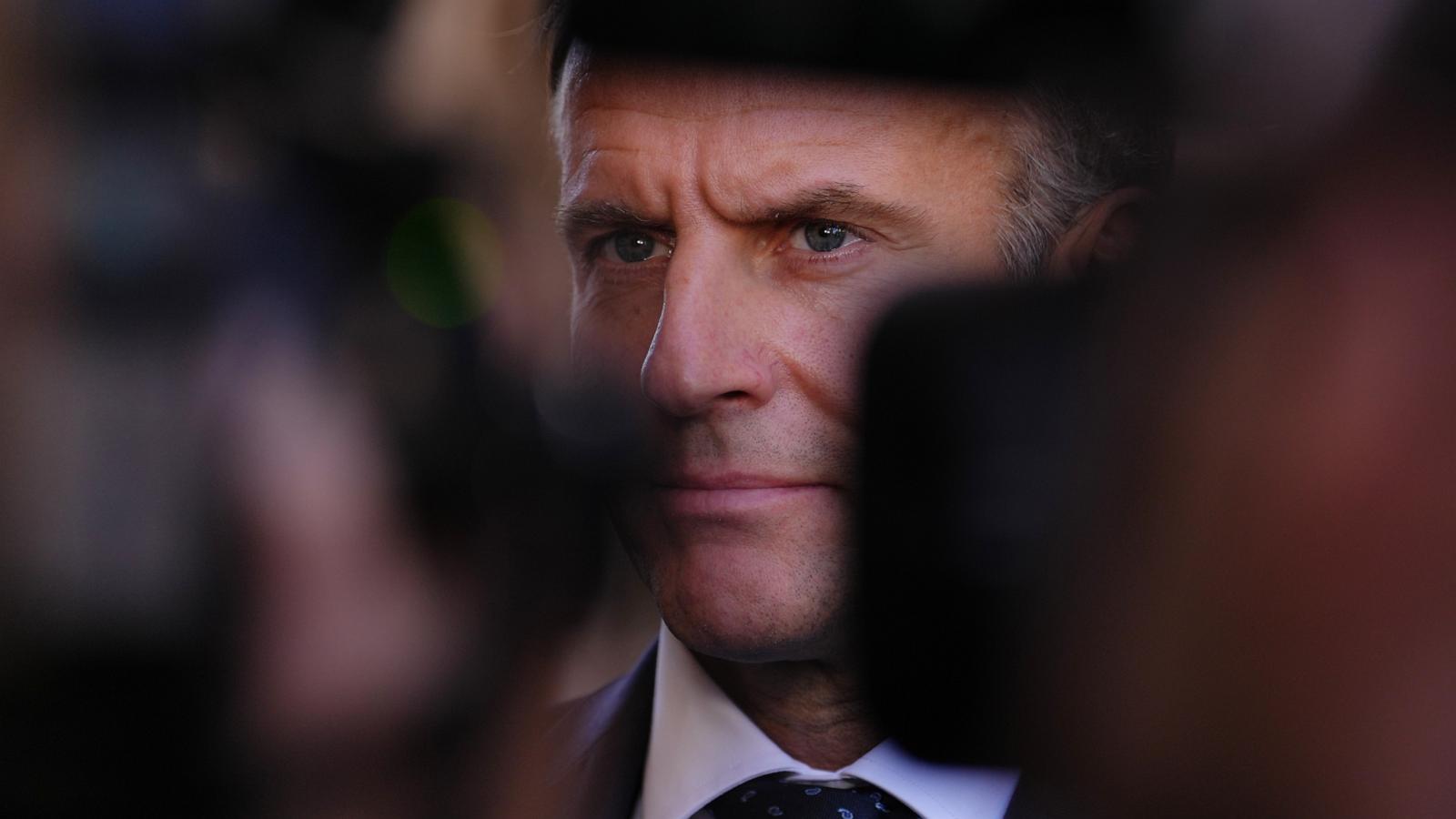
France restricts public alcohol consumption and outdoor sports amid heat wave
France is in the grips of a severe heat wave, leading to canceled trains, concerts and sports events
Trump drops F-bomb in apparent threat to kill peace negotiators: 'Won't even make it back'
President Donald Trump appeared to threaten Iranian peace negotiators with assassination Sunday in a “bonkers” phone call with Fox News’ Trey Yingst, the details of which Yingst revealed on air just moments later.Last week, Trump officially agreed to a tentative peace deal with Iran, giving the two parties 60 days to finalize a more permanent agreement to end hostilities. Vice President JD Vance arrived in Switzerland Sunday to meet with an Iranian delegation of negotiators led by Speaker Mahammad Bagher Ghalibaf and Foreign Minister Abbas Araghci.However, after Iranian military officials announced on Saturday that they would, again, close the Strait of Hormuz due to violations of the tentative peace deal, Trump suggested, Yingst said, that the Iranian negotiators may not “make it back” to their home country.“President Trump tells Fox News he spoke with Iranian officials overnight and said ‘you close it and you won’t have a country,’” Yingst said, recalling his phone call with Trump held moments earlier. “He went on to tell these officials, ‘you won’t even make it back to your f---ing country.’”Whether Trump’s remarks suggested he may order the Iranian negotiators assassinated before their return home remains unclear, though multiple Iranian negotiators have been assassinated throughout the duration of the U.S. war against Iran, such as Ali Larijani, the former speaker of the Iranian Parliament who was killed in March in an Israeli airstrike."We'll take over the rest of your country ... I'll blow the shit out of them" -- here is Trey Yingst's entire segment about the bonkers phone call he says he had with Trump this morning that apparently included threats to assassinate Iran's leadership, impose draconian US tolls… pic.twitter.com/RLi9bos14Q— Aaron Rupar (@atrupar) June 21, 2026
Iran's clerics — not MAGA voters — may decide Vance's future in politics: expert
JD Vance's path to the presidency may run through Tehran, and not in a way that helps him. That is the striking implication of a new analysis by Iran expert Karim Sadjadpour, who argues in The Atlantic that the vice president's political future now depends heavily on whether hardline Iranian officials decide to play along with Donald Trump's latest gamble.Sadjadpour, a senior fellow at the Carnegie Endowment for International Peace, lays out how Trump handed Vance responsibility for an enormous and unlikely task: not merely striking a new nuclear deal, but engineering a wholesale transformation of US-Iran relations after a war that Sadjadpour says ended in humiliation for the president. The memorandum that paused the fighting, he writes, is so lopsided that it reads as if Tehran drafted it, with 13 of its 14 provisions amounting to boilerplate or favoring Iran outright.That is the project Vance has been told to deliver, and Trump has been remarkably candid about who absorbs the blame if it fails. "If it works out, I'm going to take the credit," the president said, according to the piece. "If it doesn't work out, I'm blaming J.D."The expert's sharpest observation is about where that leaves the vice president. Vance's prospects, Sadjadpour writes, "may rest as much on Islamic Revolutionary Guard Corps officers as on Republican-primary voters." In other words, a man eyeing the 2028 nomination has tied his standing to the cooperation of the very military and clerical figures who built their careers on resistance to the United States.Vance is reportedly pinning hopes on Mohammad Baqer Qalibaf, a former IRGC general and current speaker of Iran's Parliament, with whom he spent more than 20 hours in Islamabad and supposedly developed a rapport. Sadjadpour is skeptical that private warmth means anything. He notes that Qalibaf's public appearances, where he mocks America, praises Hezbollah, threatens Israel, and celebrates partnership with China, are a far more reliable guide to Tehran's intentions than any backroom assurances.The broader picture Sadjadpour paints is of an Iranian regime that thrives on isolation and treats sabotaging American presidents as a point of pride. He traces that pattern back to the 1979 revolution and the hostage crisis that helped sink Jimmy Carter's reelection. This time, he suggests, Tehran stands to claim an unusually rich prize. The Islamic Republic, he writes, may get "a two-for-one": the presidency of Donald Trump, and the presidential ambitions of JD Vance.If Sadjadpour is right, Vance has accepted a mission whose success is largely outside his control, with a boss already rehearsing the line that will pin any failure on him. The clerics and generals in Tehran, not the voters in Iowa, may end up deciding how that story turns out.
Trump's behavior at home is blowing up in his face on the world stage: analyst
Donald Trump's habit of punishing Republicans who cross him may have just cost him the political cover he needs to sell his Iran deal, according to political analyst Sabrina Haake, who argues the president's domestic vendettas are actively undermining him abroad.In her latest newsletter, Haake makes the case that Trump's "personal thirst for revenge at home is hurting him on Iran." Her logic is straightforward: the lawmakers Trump targeted in primaries, several of whom lost as a result, no longer owe him anything and are now free to attack his foreign policy without fear of consequences. As she puts it, they "have zero Fs left to give."The result has been a chorus of Republican criticism aimed at the memorandum of understanding that ended Trump's war with Iran. Haake points to Sen. Bill Cassidy, who called the agreement "the worst foreign policy blunder in decades" and warned that Iran learned "threatening the Strait of Hormuz works." Sen. Thom Tillis flagged the war's $100 billion price tag, while Rep. Thomas Massie noted that figure is five times what Congress spends annually on roads and bridges. Even former Vice President Mike Pence said the deal "smacks of appeasement," and Sen. Ted Cruz blasted a reconstruction fund he described as handing "billions of dollars to theocratic lunatics."Haake's central argument is that this is a self-inflicted wound. Trump alienated the very voices he would now need to defend the agreement, and he is reportedly planning to skip the congressional review required under the 2015 Iran Nuclear Agreement Review Act, a move that members of both parties have urged him not to make. Having burned those bridges, she contends, he is left without allies to make his case.The analyst is also sharply critical of the deal's substance, which she says bears no resemblance to the "UNCONDITIONAL SURRENDER" Trump demanded fifteen weeks ago. Instead of regime change, disarmament, or American control of Iranian oil, Haake writes that the MOU waives sanctions immediately, lets Iran resume oil exports, and steers an estimated $300 billion reconstruction package toward the country, while securing only a temporary 60-day window of toll-free passage through the Strait of Hormuz. She frames it bluntly as the US "effectively paying Iran to stop threatening international shipping."
7 killed and dozens injured following series of weekend shootings in Chicago
A spate of shootings in Chicago has led to at least 38 injuries and seven deaths since Friday evening, police say, prompting President Donald Trump to renew his call for a military intervention in the nation's third-largest city.
Colombians vote in runoff election expected to trigger shift in decades-long armed conflict
Frontrunner Abelardo de la Espriella has vowed to return to full-scale military confrontation with armed groupsGhost of far-right paramilitaries hovers over Colombia’s presidential runoff voteColombians are going to the polls in a presidential runoff expected to trigger a dramatic shift in the country’s decades-long armed conflict, now at its most violent point since the landmark 2016 peace agreement between the government and most of the Revolutionary Armed Forces of Colombia (Farc).Polls show the frontrunner is the Trump-admiring far-right lawyer and millionaire businessman Abelardo de la Espriella, who has vowed to abandon President Gustavo Petro’s “total peace” plan of negotiating the disarmament of all criminal organisations and instead return to full-scale military confrontation with armed groups. Continue reading...
Ex-senior official suspects Trump to 'bury horrific' incident that killed children: report
A former senior Pentagon official sounded the alarm on Sunday over their belief that the Trump administration was likely to bury an internal investigation into an incident that coincided with the launch of the U.S. war against Iran, an incident one Democratic lawmaker described as “one of the most horrific episodes” of the “illegal Trump war.”Trump’s Operation Epic Fury began with “double tap” strikes on Shajareh Tayyebeh, an Iranian girls’ elementary school, which killed at least 156 people, 120 of them children. Trump initially blamed Iran for the strikes before it became clear that a U.S.-made Tomahawk missile was used in the attack.While the U.S. military is reportedly still investigating the incident, several former Pentagon and national security officials “expressed doubt” to The Guardian for its report published on Sunday that the results of the investigation would ever be made public.“It’s very rare that you would have a military operation and not have some incidents where there was a mistaken target and civilians are harmed or killed, but then there is a system for investigating, assessing accountability and taking responsibility,” one former senior Pentagon official told The Guardian, speaking on the condition of anonymity.“There’s a very clear process for this, and I’m very doubtful that the [Defense Secretary Pete] Hegseth Pentagon will follow through.”Rep. Yassamin Ansari (D-AZ), also speaking with The Guardian, said that she had vigorously pressed the Trump administration for answers, only to be stonewalled.“The US strike [on the girls’ elementary school] is one of the most horrific episodes of the entire illegal Trump war in Iran,” Ansari said.“Donald Trump is hiding the truth from the American people and Congress, and deflecting blame to Secretary Hegseth, because he does not want the public to know the true horrors of what he unleashed on the Iranian people with absolutely nothing to show for it.”
Ethiopia's ruling party retains parliamentary majority in election marred by insecurity
Ethiopia’s ruling party has maintained an overwhelming majority in parliament following the June 1 election
Czechs rally against a government plan to overhaul the funding of public broadcasters
Thousands of Czechs are rallying in Prague to protest a government plan to overhaul the funding for public broadcasters